
Key points at a glance
- Clients search by profession, area of law and place, often adding “near me”, “cost” or a language.
- Every important area of law or service needs its own substantial page; interchangeable pages for each town tend to do harm.
- Name, address and phone number must match across your website, Google profile and official registers.
- Structured data such as LegalService, Notary or AccountingService helps search engines categorise your firm.
- AI assistants repeat what is stated clearly and verifiably on your website and in directories.
This post is general information, not legal or tax advice for your individual case. Laws, professional guidelines and chamber fees change: check the details with your chamber, the relevant authority or your professional association before you make a decision.
How clients search
People looking for a firm rarely type just “lawyer”. Google's autocomplete suggestions show how people actually search: “anwalt arbeitsrecht wien” (employment lawyer Vienna), “scheidungsanwalt kosten” (divorce lawyer cost), “tax adviser near me”, “notar wien englisch” (English-speaking notary Vienna), “mediation scheidung ablauf” (how divorce mediation works). Four patterns emerge that your website should serve.
| Search pattern | Example | What the page must deliver |
|---|---|---|
| Profession or area of law plus place | Anwalt Arbeitsrecht München (employment lawyer Munich), Steuerberater Graz (tax adviser Graz) | A page on the area in which the place and catchment area appear naturally |
| Near me | bookkeeper near me, notary near me | A complete Google profile, address and directions on the website |
| Cost and initial consultation | Scheidungsanwalt Kosten, Notar Kosten Wohnungskauf (notary cost for a flat purchase) | An honest explanation of the billing model, for notaries a reference to the statutory fees |
| Language or target group | tax adviser Vienna English, Anwalt für Ärzte (lawyer for doctors) | State languages and target groups explicitly, not just with a flag icon |
The terms differ between the two countries. In Austria people search for “Lohnverrechnung” (payroll), in Germany for “Lohnbuchhaltung”; “Fachanwalt” (certified specialist lawyer) is a German search term, as the title does not exist in Austria. In Vienna, many people search with the district or postcode, for example “Steuerberater 1010”. Use your clients' words, not just those of the law, and if you advise international clients, cover the English terms they type as well.
One page per area of law, not per town
The most important lever is the structure of your website. A “Services” page listing twelve areas of law in bullet points cannot match any of the twelve searches well. A dedicated page for employment law, one for family law and one for tenancy law can. Each of these pages answers the questions people in exactly that situation have, and says where you work: “We represent employees in Salzburg and the Flachgau.”

Tempting but risky are pages such as “Anwalt Arbeitsrecht Linz”, “Anwalt Arbeitsrecht Wels”, “Anwalt Arbeitsrecht Steyr” with almost identical text. Google treats pages like these, built only to capture search queries, as spam. Professional law adds another issue: a page suggesting an office in Wels when there is none is misleading. Depending on the profession, branch offices require approval or notification, for lawyers in Austria for example under § 7a RAO. Separate location pages are therefore only worthwhile for real locations, with their own address, team and Google profile. If you want to be found beyond your own town, a clear target group gets you further than location pages; how to choose one is shown in the guide Finding a niche and showing it on your website.
Content that gets found
Google recommends writing content for people, not for search engines. For professional firms, that means in concrete terms: deadlines, processes, documents, costs. A page on dismissal that explains why in Germany the three-week deadline for an unfair dismissal claim is what counts helps more than a paragraph about “competent representation”. A tax advisory page for landlords that lists the most important receipts gets shared and linked to.
- Who writes: name the author with their professional title. This builds trust with readers and search engines.
- When: show the date of the last revision. In legal and tax topics, content goes out of date quickly.
- For whom: address one target group directly instead of everyone at once.
- Where: name the place and catchment area, and the courts or tax offices you deal with regularly, where it fits factually.
Official and private directories
Official registers are particularly trustworthy sources for search engines and AI assistants. Your entry there is usually created automatically on admission or appointment; you can often maintain additional details such as practice areas, languages or website yourself.
| Profession | Austria | Germany |
|---|---|---|
| Lawyers | ÖRAK lawyer search | Bundesweites Amtliches Anwaltsverzeichnis (official national lawyer register) |
| Tax advisers | KSW member directory | Steuerberaterverzeichnis (tax adviser register) |
| Auditors | KSW member directory (filter for auditing) | WPK professional register |
| Bookkeeping | Register of the bookkeeping professions, WKO Firmen A-Z | no official register; associations and business directories |
| Mediators | Ministry of Justice list | no official register; association lists |
| Notaries | Notariatsfinder (notary finder) | Bundesnotarkammer notary search |
On top of these come private directories and business listings such as Herold in Austria or Gelbe Seiten and Das Örtliche in Germany, and for lawyers also portals such as anwalt.de. A listing is worthwhile mainly where clients actually search. Watch out for portals that charge per referred matter: commissions for referring clients are prohibited for lawyers and tax advisers. Notaries in Germany may only appear in directories that are equally open to all notaries, and not in rankings.
Consistent firm data
Search engines compare what different sources say about your firm. If the register says “Mag. Eva Huber, Rechtsanwältin”, the Google profile “Kanzlei Huber”, the website “Huber Legal” and a business directory still shows the old address, the picture becomes blurred. Decide once how your name, address, phone number and website are written, and use exactly that spelling everywhere.
Data check after every move or change of name
- Firm name exactly as in the Firmenbuch or Handelsregister (commercial register) or on the firm's sign
- A company's short name used uniformly at all locations, as professional law requires
- Address with the same spelling, including staircase or floor if clients need it
- One central phone number instead of changing extensions
- Website address with https and no detours via old domains
- Official register, Google profile, business directories and social media profiles checked
Structured data for professional firms
Structured data is machine-readable information in your website's code that tells search engines: this is a firm, at this address, with these opening hours. Google supports the LocalBusiness type for this and recommends using the most specific subtype. Schema.org offers suitable types for professional firms:
- LegalService for law firms; the older Attorney type is considered deprecated.
- Notary for notaries' offices, a subtype of LegalService.
- AccountingService for tax advice, auditing, bookkeeping and payroll.
- There is no dedicated type for mediation; LegalService or LocalBusiness are common choices.
- Describe people as Person with their professional title (jobTitle) and areas of expertise (knowsAbout).
What matters is complete information on name, address, phone, opening hours, catchment area (areaServed) and website. Review stars for your own firm, on the other hand, achieve nothing: Google does not show stars in search results for reviews that a business marks up about itself on its own site.
Google profile and reviews
In the map view, the Google Business Profile is decisive. Google names three factors for local ranking: relevance, distance and prominence. You influence relevance through category, description and services, and prominence through reviews, links and mentions. How to set up the profile and why professional firms need to be particularly careful when replying to reviews is explained in the guide to the Google profile.
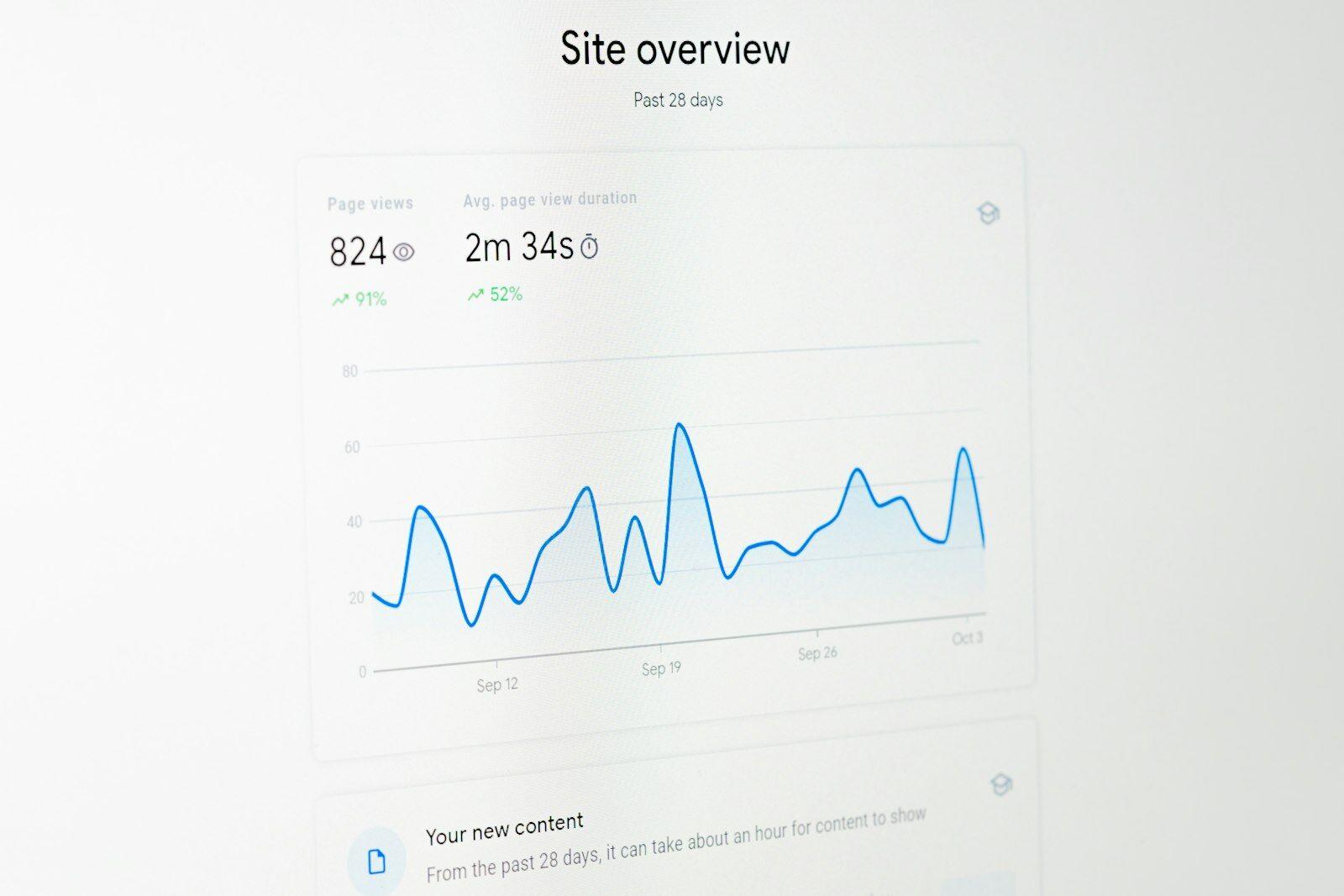
Measure what works, but sparingly with data. Google Search Console shows which search queries your pages appear for, without you having to track visitors. For visitor numbers on the website, cookie-free analytics are enough. A cookie banner that first asks visitors on your insolvency advice page to consent to advertising tracking does not suit a professional firm anyway.
Getting found in AI assistants
More and more people no longer ask a search engine but an assistant: “Which tax adviser in Innsbruck knows about rental income?” or “Do I need a lawyer for an uncontested divorce?”. Such assistants rely on what they find online and consider reliable. They reward websites that say clearly what the firm does, where it is located, which languages it advises in and how to get in touch, and whose details match directories and the Google profile.
In practice, this means: spell facts out instead of hiding them in images or slogans. “We advise in German, English and Croatian” is understandable for a machine; a row of flag icons is not. An FAQ page with real questions and short, correct answers is readily quoted. You can test how your firm appears in search results and AI answers with the Google preview and the AI preview.
Where professional law draws the line
How to get it right
- Describe practice areas factually and connect them with the place
- Choose domains with your name or a factual reference; the BGH (German Federal Court of Justice), for example, did not object to “steuerberater-suedniedersachsen.de”
- Use search ads if your professional law allows them, with factual copy
- Only advertise branch offices once they have been approved or notified
Better avoid
- Superlatives such as “best lawyer in Graz” in titles and copy
- Domains that suggest exclusivity or price advertising; the OGH (Austrian Supreme Court) found “kaufvertrag-guenstig.at” (cheap purchase contract) to be sensationalist
- Running Google ads as a notary in Germany; the Bundesnotarkammer considers them impermissible
- Specialist-sounding terms without an award, such as “specialist” without demonstrable knowledge
The details for your profession are in the guides to advertising law, for example for lawyers in Austria, tax advisers in Germany or mediators in Germany. Which pages and content a firm website needs overall is summarised in the article Content for a firm website.
A website that gets found locally
Our firm websites come with their own page for each practice area, structured data for your profession and cookie-free analytics. Request a free preview.
A no-obligation preview of how your firm website could look with us.
Sources
- Google – Tips to improve your local ranking
- Google Search Central – Structured data for local businesses
- Google Search Central – Spam policies
- Google Search Central – Creating helpful content
- Schema.org – LegalService
- Schema.org – AccountingService
- ÖRAK – Find a lawyer
- BRAK – Bundesweites Amtliches Anwaltsverzeichnis
- Protection Against Dismissal Act (KSchG) § 4 (deadline for a claim)
- RIS – Lawyers' Act (RAO) § 7a (branch offices)
- RIS – OGH 30.01.2020, 27 Ds 3/19a (kaufvertrag-guenstig.at)
- Bundesnotarkammer: Circular 03/2020, explanatory notes on section VII