
Key points at a glance
- Ads pay off above all for urgent searches (dismissal, criminal proceedings, tax audit) and for new firms that do not yet rank organically.
- Work with phrase match or exact match and a list of negative keywords, otherwise you pay for clicks from job seekers and students.
- Legal and tax keywords can be expensive. Keyword Planner shows estimates; a test month with a fixed budget shows reality.
- The ad text is advertising under professional law: objective, without superlatives, without titles you are not allowed to use.
- Notaries in Germany may not run search ads; in Austria they are not expressly prohibited, but tightly limited.
This post is general information, not legal or tax advice for your individual case. Laws, professional guidelines and chamber fees change: check the details with your chamber, the relevant authority or your professional association before you make a decision.
Is Google Ads worth it for professional firms?
Google Ads are search ads: you bid on search terms, and when someone searches for them, your ad appears above or below the organic results, labelled “Sponsored”. You pay per click. That way you buy visibility at exactly the moment someone has a problem. As soon as you stop the budget, however, the visibility is gone again. Ads therefore do not replace a good website or a well-maintained Google Business Profile; they complement them.
Whether it pays off depends less on the profession than on the type of search. Someone who types “Anwalt Kündigung erhalten” (lawyer, received notice of dismissal) needs help in the next few days and will call. Someone searching “was ist eine GmbH” (what is a limited company) wants to read, not to instruct a firm. The following overview helps you assess it:
| Situation | Ads tend to make sense | Ads tend not to make sense |
|---|---|---|
| Type of search | urgent and specific: dismissal, penalty order, house search, tax audit, deadline running | informational: explaining terms, templates, statutory texts |
| Stage of the firm | newly founded, website has no rankings yet | has ranked on the first positions for the most important searches for years |
| Field of activity | clearly defined service with a local angle, such as payroll or separation mediation | very broad offering without a focus that cannot be described in three lines |
| Capacity | you can take on new enquiries at short notice | you are fully booked or keep a waiting list |
| Profession | lawyers, tax advice, bookkeeping, mediation | notaries; auditing only for specific audit services |
What professional law means for ads
Ads are subject to the same rules as your website. Paid search ads are permitted for most professions; what matters is the content. The details are in the guides on advertising law for each profession and country; here is the short version:
- Lawyers: In Austria, advertising must be true and objective (§ 47 RL-BA 2015); in Germany it must inform objectively in form and content (§ 43b BRAO, § 6 BORA). More in advertising for lawyers in Austria and in Germany.
- Tax advisers and auditors: In Austria the WTBG 2017 and the WT-AARL apply, in Germany § 57a StBerG and § 52 WPO respectively. See advertising for tax advisers in Austria and in Germany.
- Bookkeepers: The ad must not promise a service you are not allowed to provide, in Austria under § 61 BiBuG, in Germany under § 8 StBerG. A keyword such as “Steuererklärung” (tax return) is therefore often the wrong path.
- Mediators: Above all, unfair competition law applies. Use designations such as “eingetragen” (registered) or “zertifiziert” (certified) only if they are accurate.
- All professions: The names of other firms belong neither in your keywords nor in your ad texts. That is risky at the very least and sits badly with the duty of collegiality.
Keywords, match types and negative keywords
The biggest budget leak in ads for professional firms is keywords that are too broad. Anyone who bids on “Steuerberater” (tax adviser) also pays for clicks from people looking for training, googling an exam question or wanting to call the chamber of tax advisers. Google offers three keyword match types that determine how closely a search has to match your keyword:
| Match type | Notation | Effect | For professional firms |
|---|---|---|---|
| Broad match | Anwalt Arbeitsrecht | related searches too, largest reach | only with well-maintained exclusions and close monitoring |
| Phrase match | "Anwalt Arbeitsrecht" | searches that include the meaning of the keyword | a good default to start with |
| Exact match | [Anwalt Arbeitsrecht Linz] | searches with the same meaning | for the most important, most expensive terms |
At least as important are negative keywords. They define for which searches your ad should never appear. These groups have proven useful for professional firms:
- Jobs and training: “Gehalt” (salary), “Ausbildung” (training), “Stellenangebot” (vacancy), “Praktikum” (internship), “Studium” (degree), “Prüfung” (exam)
- Free self-help: “Muster” (sample), “Vorlage” (template), “kostenlos” (free), “Formular” (form), “PDF”
- Knowledge rather than instruction: “Definition”, “was ist” (what is), “Paragraph” (section)
- Services you do not offer or are not allowed to offer, such as “Steuererklärung” (tax return) for bookkeepers
- Places outside your catchment area, if you only advise in person
Location, times and budget
Most clients look for a firm near them. Limit the campaign to your catchment area, for example the city and a radius around the office. In the advanced location options, “Presence or interest” is set by default: then the ad is also shown to people who are merely interested in the region. For a firm that advises in person, “Presence” is usually the better choice, meaning people who are in the region or regularly spend time there.

- Ad schedule: If you expect calls, only run ads with a call option when the phone is staffed.
- Language: If you also advise in English, Turkish or Croatian, a separate ad group with a landing page in that language is worthwhile; see multilingual website.
- Budget: Set a daily budget you will not regret even if no enquiry comes in during the first month. A test month shows what a click in your area actually costs.
- Bidding strategy: Start with a strategy that caps clicks until enough data is available. Automated strategies based on conversions need reliable measurement.
Ad texts within professional law
A search ad consists of several short headlines and descriptions that Google combines. Because you do not control which combination appears, every single element has to be correct on its own. Write what you do, for whom and where. Use ad assets: sitelinks to fields of activity and contact, your phone number and the location from your Business Profile.
How to get it right
- “Arbeitsrecht in Graz: Beratung bei Kündigung und Aufhebungsvertrag” (employment law in Graz: advice on dismissal and termination agreements)
- “Lohnverrechnung für Betriebe in Linz: laufend und termingerecht” (payroll for businesses in Linz: ongoing and on time)
- “Appointments at short notice, also by video”, if that is actually true
- “Fachanwältin für Familienrecht” (specialist lawyer for family law) only in Germany and only with the title awarded
- The same terms as on the landing page, so that ad and page match
Better avoid
- Superlatives: “the best lawyers in Vienna”, “No. 1 for tax”
- Promises of success: “We'll get your money back”, “100 % success rate”
- Titles you do not hold: “Fachanwalt” in Austria or without it being awarded
- Bait prices such as “free first consultation” if they are impermissible under professional law or incomplete
- Names of other firms or comparisons with colleagues
If you work with an agency, read every ad text yourself before approving it. In Austria, § 48 RL-BA expressly requires lawyers to prevent advertising by third parties that breaches professional rules, as far as can reasonably be expected, and in the other professions you are also responsible for advertising run in your name. Switch off automatically created ad texts and assets, or at least check them regularly.
The landing page decides
A click on the ad is paid for; an enquiry is not yet won. So do not send the ad to the home page, but to the page for the relevant field of activity, as described in the guide on fields of activity. Someone who searched for “Anwalt Kündigung” (lawyer dismissal) wants to read straight away that you help with dismissals and how to reach you.
What a good landing page for ads offers
- A heading with the same terms as the ad
- Two or three sentences on how you help in this situation and what clients should bring, for example as a document checklist
- A tap-to-call phone number and a short contact form, visible on a smartphone without scrolling
- Information on the first meeting, process and costs, as far as professional law permits
- Fast loading on mobile, see loading time and mobile website
- A complete legal notice and a privacy policy that mentions Google Ads and the measurement of enquiries
Landing pages that suit ads
Take a look at example websites where every field of activity has its own page with a clear way to get in touch.
Measuring enquiries, with consent
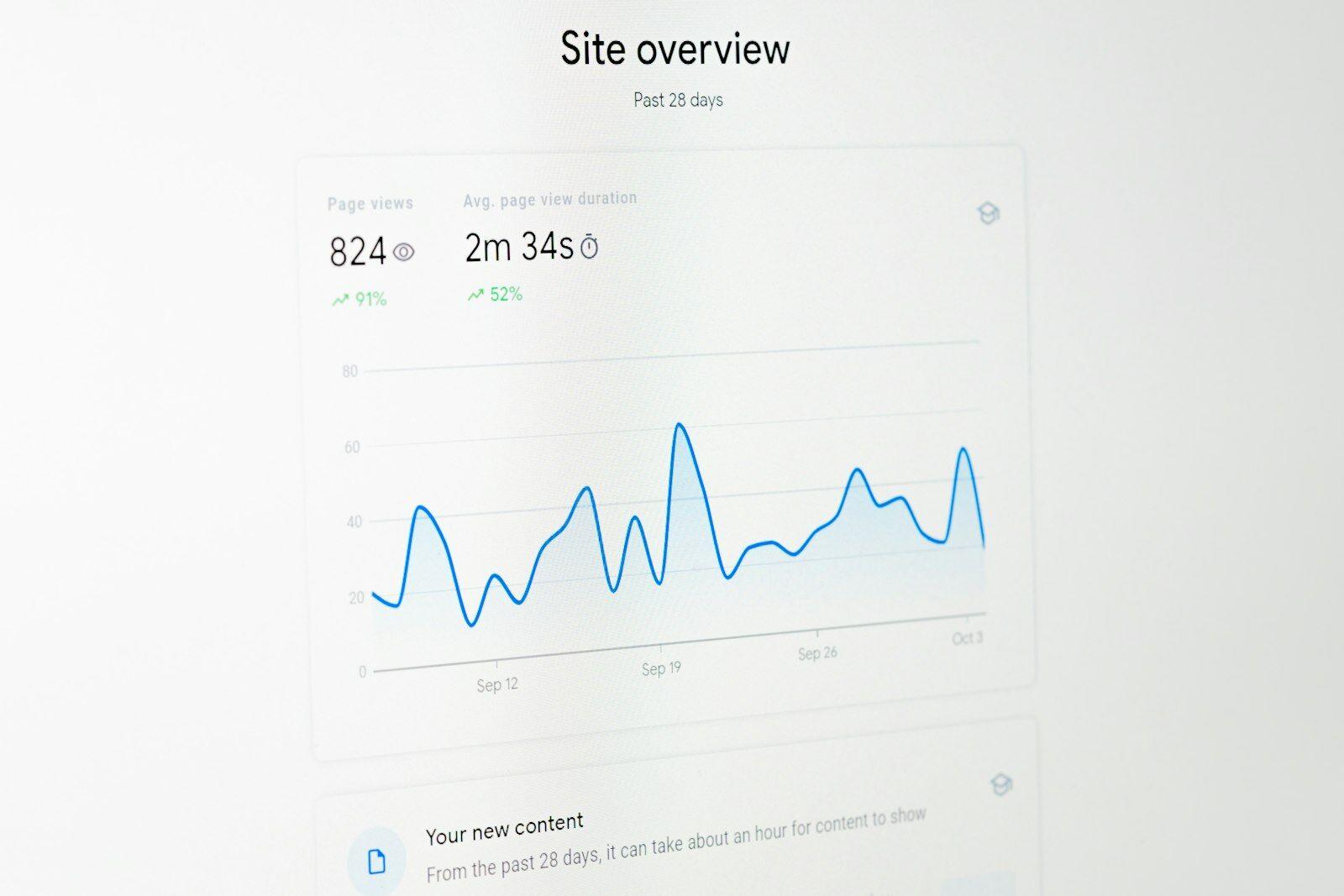
Without measurement, after three months you only know how much money was spent. Google Ads can count calls from the ad and submitted forms as conversions. To do so, the Google tag on your website sets cookies or reads device data, and in both countries that requires prior consent: in Germany under § 25 TDDDG, in Austria under § 165(3) TKG 2021. For users in the EEA, Google's EU user consent policy additionally requires that consent is obtained and passed on via consent mode.
- Count, don't read along: A conversion is “form submitted”, not the content of the message. Because of confidentiality, the content of enquiries never belongs in an advertising system.
- Careful with add-on features: Features that transmit form data such as email addresses to Google, even in hashed form, are a poor fit for professional firms. Leave them out.
- Ask instead of tracking: The simplest measurement remains the question in the first meeting: “How did you find us?” Write down the answer, and you will also see enquiries from people who did not allow cookies.
- Cookie banner: Equivalent buttons for accepting and rejecting, no pre-ticked boxes. More in the post on the cookie banner.
Which other metrics make sense and how to measure the success of the whole website is described in the guide measuring success.
How to get started
Create the account and verify as an advertiser
Set up the Google Ads account in the firm's name, not an agency's. Google requires advertisers to verify their identity or organisation with documents. The verified name appears in the ad disclosures and in the Ads Transparency Center, so it should match the firm name exactly.
One campaign, few ad groups
Start with one search campaign and two or three ad groups, one per field of activity. Switch off ads in the Display Network and on partner sites.
Enter keywords and exclusions
Ten to twenty keywords as phrase match or exact match, plus the exclusion list from above.
Set up measurement with consent
Load the Google tag only after consent in the cookie banner, create conversions for calls and forms, and update the privacy policy.
Observe for four weeks, then decide
Check search terms weekly and add exclusions. After a month, compare costs with actual enquiries and decide whether to continue, rework or stop.
In parallel, building organic visibility is worthwhile, because it does not cost per click. The guides local SEO for professional firms and planning visibility show how.
A website that makes ads worthwhile
Our firm websites have their own page for each field of activity, load quickly on smartphones and come with cookie banner, legal notice and privacy policy. Request a free preview.
A no-obligation preview of how your firm website could look with us.
Sources
- Google Ads Help – Keyword match types
- Google Ads Help – Negative keywords
- Google Ads Help – Advanced location options
- Google Ads Help – Keyword Planner
- Google Ads policies – Advertiser verification
- Google Ads Help – Consent mode
- Gesetze im Internet – § 25 TDDDG
- RIS – Telecommunications Act 2021 (TKG 2021), § 165
- ÖRAK – Guidelines for practising as a lawyer (RL-BA 2015)
- Federal Lawyers' Act (BRAO) § 43b (advertising)
- Tax Advisory Act (StBerG) § 57a (advertising)
- Tax Advisory Act (StBerG) § 8 (advertising)
- RIS – BiBuG 2014, § 61 (penalties)
- Bundesnotarkammer: Circular 03/2020, explanatory notes on section VII